📌 Appears in:
Plain English Summary
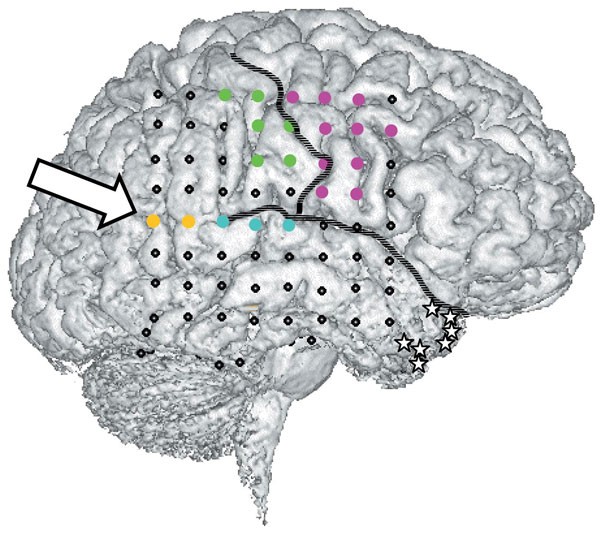
This is a genuinely jaw-dropping finding: doctors electrically stimulated a specific spot in a patient's brain and reliably triggered out-of-body experiences on demand. The patient, a 43-year-old woman being evaluated for epilepsy surgery, reported floating near the ceiling and watching her own body lying in bed below — all from a tiny electrical pulse to the right angular gyrus (a brain region where body-sense and balance signals meet). At lower voltages she felt sensations of sinking or falling; crank it up slightly and she was fully outside her body looking down. The same brain spot also produced bizarre body illusions — legs looking shorter, arms seeming to drift toward her face. Crucially, what she saw during the OBE matched exactly which body parts were being distorted by the stimulation. This landmark case became a cornerstone in debates about whether out-of-body and near-death experiences have a straightforward neurological explanation.
Links
Related Papers
Same Research Program
Companion
- There Is Nothing Paranormal about Near-Death Experiences: How Neuroscience Can Explain Seeing Bright Lights, Meeting the Dead, or Being Convinced You Are One of Them — Mobbs, Dean (2011)
- Does the Arousal System Contribute to Near-Death and Out-of-Body Experiences? A Summary and Response — Long, Jeffrey (2007)
- Surge of neurophysiological coherence and connectivity in the dying brain — Borjigin, Jimo (2013)
- N,N-Dimethyltryptamine and the Pineal Gland: Separating Fact from Myth — Nichols, David E (2017)
More in Nde
The Central Clinical Relevance of Near-Death Experiences in Acute Care Contexts
Explanation of Near-Death Experiences: A Systematic Analysis of Case Reports and Qualitative Research
Neuro-Functional Modeling of Near-Death Experiences in Contexts of Altered States of Consciousness
AWAreness during REsuscitation - II: A Multi-Center Study of Consciousness and Awareness in Cardiac Arrest
Which Near-Death Experience Features Are Associated with Reduced Fear of Death?
📋 Cite this paper
Blanke, Olaf, Ortigue, Stéphanie, Landis, Theodor, Seeck, Margitta (2002). Stimulating illusory own-body perceptions. Nature. https://doi.org/10.1038/419269a
@article{blanke_2002_stimulating_obe,
  title = {Stimulating illusory own-body perceptions},
  author = {Blanke, Olaf and Ortigue, Stéphanie and Landis, Theodor and Seeck, Margitta},
  year = {2002},
  journal = {Nature},
  doi = {10.1038/419269a},
}